How Homeowners with Low-Interest Mortgages Can Fight Against An Uncertain Future
If you were lucky enough to secure a mortgage when interest rates were at rock-bottom levels, you may have felt like you won the financial lottery. A 30-year fixed loan at 3% or less meant affordable monthly payments, long-term stability, and the flexibility to build wealth through homeownership. But now, as mortgage rates have more than doubled, that once-celebrated deal has turned into a financial anchor. Fewer homes are being listed, buyers are struggling with affordability, and the real estate landscape has fundamentally shifted. But while the challenges are real, so are the opportunities. If you feel financially trapped in your home, there are ways to navigate these market conditions—without making costly mistakes. Why Higher Borrowing Costs Have Frozen the Market At the heart of the issue is the “lock-in effect.” When homeowners hold mortgages with rates far below current market levels, the financial incentive to sell and buy again disappears. Imagine trading a 3% mortgage for one at 7%—your monthly payment could skyrocket, even if you’re buying a similar home. This has led to a historic drop in housing inventory, making it harder for buyers to find properties and reducing overall sales activity. Many homeowners who would have normally moved by now—whether upgrading, downsizing, or relocating—are simply staying put. Tapping Home Equity Without Selling If moving isn’t an option but you need cash for renovations, debt consolidation, or other financial needs, your home’s equity can be a powerful tool. Home equity loans and home equity lines of credit (HELOCs) allow you to borrow against the value of your home, often at lower interest rates than personal loans or credit cards. While borrowing costs have risen, they are still far lower than what you’d face with a new mortgage. If you’re looking to make your current home work for your evolving needs, using home equity to fund a renovation or expansion may be a smart alternative to selling. Turning Your Home Into an Investment Property For those who want to move but can’t stomach today’s high mortgage rates, converting your current home into a rental property might be worth considering. With low supply pushing up rents in many markets, you could generate passive income while securing a new home under different financial terms. This strategy works best if your low mortgage rate allows you to cover your loan payments with rental income, or if you’re in a high-demand rental market. However, being a landlord comes with responsibilities, so it’s important to factor in management costs, taxes, and potential vacancies before making the leap. Creative Financing: Alternative Ways to Buy Your Next Home If selling and buying a new home is unavoidable, consider alternative financing options to minimize the sting of higher interest rates. Adjustable-rate mortgages (ARMs), which offer lower initial rates that adjust after a set period, could provide short-term relief—especially if you expect rates to decline in the coming years. Some lenders and homebuilders are also offering rate buydowns, where they reduce the interest rate on your loan for the first few years to help with affordability. While these options require careful planning, they can be effective for buyers who anticipate future financial flexibility. Waiting Out the Market: How Long Until Conditions Improve? For homeowners willing to be patient, market conditions may eventually shift in their favor. If inflation cools and the Federal Reserve begins to ease interest rates, mortgage rates could decline in the coming years, making moving more financially viable. Additionally, a slowing housing market may lead to price adjustments, potentially creating better opportunities for buyers down the line. In the meantime, improving your financial position—paying down debt, boosting your savings, and strengthening your credit score—can put you in the best possible position for when the market becomes more favorable. Earn Some Extra Cash With rising costs putting pressure on household budgets, starting a small business can be a smart way to generate additional income and build long-term financial security. Whether it’s a side hustle or a full-time venture, launching a business requires careful planning—developing a solid idea, researching your market, and handling the legal essentials. One of the best steps you can take is forming a Limited Liability Company (LLC), which protects your personal assets if your business runs into legal or financial trouble. While hiring a lawyer to handle the paperwork can be expensive, you can register your Pennsylvania LLC through a highly rated formation service to streamline the process at a fraction of the cost. By keeping startup expenses low and structuring your business properly, you set yourself up for success without unnecessary financial strain. Being locked into a low mortgage rate in a high-rate environment can feel frustrating, but it’s also a reminder of the financial advantage you hold.. Until market conditions shift, the best approach is to stay informed, plan strategically, and make the most of the home you’re in. When you’re ready to get started with the process of selling or buying, get in touch with the team at Franklin Investment Realty! – Shirley Martin
From Property to Progress: Turning Real Estate into Education Equity

From Property to Progress: Turning Real Estate into Education Equity In an era where financial challenges often hinder educational pursuits, innovative solutions are more essential than ever. Blending academic analytical skills with practical real estate investment experience creates a powerful approach to funding education. This guide explores house flipping to support your educational goals while building knowledge of property markets and business strategies. It provides a comprehensive roadmap to expand property reach through digital tools, increase home value through strategic upgrades, and effectively balance studies with a growing house-flipping business. Expanding Your Real Estate Network with Digital Innovation Returning to school as an adult can be daunting, especially considering the financial implications. However, flipping houses can be a lucrative way to fund your education. To maximize your property’s reach, leverage modern digital tools. Utilize immersive technologies like virtual reality tours and 3D imagery to provide potential buyers with an engaging experience. These tools allow buyers to explore homes in detail from their current location, making informed decisions without physically visiting the property easier. Also, social media platforms offer targeted advertising options, enabling you to reach specific demographics based on income, geographic location, and interests. Blending Education and Business with E-Learning Solutions Online degree programs offer a flexible and budget-friendly solution when juggling house flipping with returning to school. Unlike traditional on-campus courses, online learning allows you to tailor your study schedule around your business demands. Pursuing effective cybersecurity programs enhances your understanding of safeguarding digital assets and offers strategic advantages at a lower cost. This dual approach is beneficial as these programs are typically more affordable than traditional education, allowing you to advance your business skills without sidelining your real estate projects. Enhancing Appeal with Green Home Innovations Enhancing your property’s value is crucial for a successful flip. Consider incorporating energy-efficient features to attract environmentally conscious buyers. Simple upgrades like installing smart lighting or switching to energy-efficient appliances can make your property more appealing. Not only do these upgrades reduce energy consumption, but they also offer a reduction in utility bills, ranging from 5% to 30% annually. This makes your home both economical and attractive. Harmonizing Academia and Real Estate Ambitions Balancing house flipping with your academic goals requires careful planning. Setting achievable goals and maintaining realistic expectations are key. The fix and flip market in 2024 highlights the importance of a well-thought-out approach. By researching property values and neighborhood trends, you ensure sound investments that can yield substantial returns to help finance your education. Efficient scheduling is essential; it helps manage your time effectively, reducing holding costs and study-related stress. Elevating Home Potential Through Smart Renovations Strategic renovations are essential for enhancing property value while keeping costs in check. Update siding or garage doors to focus on curb appeal, which can yield a significant return on investment. Modernizing kitchens and bathrooms can greatly increase functionality and appeal inside. A midrange bathroom remodel, for example, can recoup nearly 67% of its cost. By prioritizing these targeted improvements, you increase your property’s desirability and market competitiveness, making it an intelligent choice for quick and profitable reselling. Tapping Into Local Market Dynamics for Optimal Returns Evaluating local property market values is crucial when flipping houses to finance your education. Analyzing these markets helps identify investment opportunities where properties are undervalued or poised for appreciation. Staying informed about asking prices provides insights into seller expectations and potential resale values. This knowledge equips you to make informed decisions, maximize financial gains, and support your academic endeavors. Navigating the Legal Landscape in Real Estate Deals Understanding contractual obligations is crucial in house flipping. Ensure a legally binding agreement where both parties sign, protecting your interests and minimizing disputes. Clearly define the terms of sale, including price, closing date, and any necessary contingencies, to establish a transparent transaction process. Including dispute resolution provisions helps maintain smooth business operations and safeguards against potential legal challenges. Embracing house flipping to finance your education is more than a financial strategy—it’s a transformative journey that weaves together the pursuit of knowledge and entrepreneurial acumen. As you engage with academic and real estate challenges, you build a foundation that bolsters your bank account, confidence, and expertise. The skills you acquire from analyzing markets, negotiating deals, and executing renovations are assets that transcend the classroom. Tapping into the symbiosis of house flipping and academic growth can unlock the potential for financial independence and a deeper understanding of the synergy between education and enterprise. Discover your dream home with Franklin Investment Realty, where over 30 years of expertise in the Greater Philadelphia area will ensure a seamless buying and selling experience! – Shirley Martin
Tips and Advice for Staging a Home Inside and Out
Staging a property is vital to ensure you can compete with the modern market. The buyers are slowing down, and property prices are unstable, so if you want to sell your home for as much as possible, you need to put in some work to make it worth it. Staged homes sell faster than their unstaged counterparts while also taking in more money from the sale: but you have to do it right. If you don’t, you could end up hurting your property’s value. These are the top points to know if you’re staging your home and how to make a difference in your property’s value and appearance. Deep Clean Inside and Out Regardless of whether a home is five years old or over a hundred, buyers want to feel like they’re the first people who have ever lived there. They don’t want to picture other people using the kitchen in the home’s past or who else may have used the bath that they’re climbing into. Deep clean every room and surface of your home. Start from the highest points and work your way down through the house. This will save you from the heartache of watching endless dirt and grim fall to the freshly mopped floor while you clean ceiling fans. Powerwash your home’s exterior, starting with sidewalks and driveways and the work on the brick cladding or siding you have. Make sure to avoid spraying up into wood shingles or against any windows or glass. Highlight the Details You Love What areas of your home need to be treated like showstoppers? Use lighting, furniture placement, and even wall art to guide eyes toward the locations of your property where you want them to look. This could mean showing off higher ceilings, using under-cabinet lighting to show off the amazing counters in your kitchen, or using acoustic panels to make bedrooms feel quiet and secluded for rest. Although this can take a little creativity, it’s a great way to boost the perceived value of your home. The Furniture Needs to Look New Unless you have a household of brand-new furniture already, it’s time to consider renting new items. You should make your space look comfortable and inviting but still fresh and new. Although you could always buy new furniture pieces, the amount of work that goes into having to sell them after, usually for a loss, can be frustrating. Renting the furniture lets you spend less, work less, and typically get sets that already make sense together. Keep Your Lawn Shining Image Source Curb appeal is as much a part of staging as filling your home with furniture is! If your property is spooky looking on the outside, nobody is going to want to take the time to find out that the inside is like paradise. This is an incredibly affordable fix for most homeowners. Put in the time to mow and edge your grass, pull weeds, trim shrubs, and put in some plants and flowers that complement your property. Make a property that will show up well on photos of your home in listings. Make Necessary Repairs From looking up different drywall corner bead types to color-matching wood stains, you need to take the time to make repairs so your home won’t scare buyers away. Consider having a home inspection ahead of time so you can get some pointers on what changes to make and what to avoid. Every property is different, but most buyers want one with as little work as possible. Add Pops of Color and Intrigue If you’re trying to figure out how to make your stone veneer fireplace stand out, it’s time to put color to work! Color is one of the most powerful tools in our arsenal, giving people feelings and ideas that they don’t even recognize the origin of. Green is soothing, red makes people hungry, and muted blue can boost creativity, so spread these throughout the home in a tasteful way. Remember to avoid making any room too busy or clashy. If you have a cool-toned stone fireplace, go for a cool-toned wall behind it, with maybe just a little more vivid color to make them both stand out. Make the Entrance as Entrancing as Possible Image Source Your porch should leave people begging to see the rest of the home! Add a fresh coat of paint to any wood, update the lighting, add a bench or other seating, and some simple decor to boost it a little. If you don’t have a full porch, you can still dress up your home’s entrance so it feels special, even if that means a seasonal wreath to match whatever time of year it is. You want buyers to feel like they’re invited and wanted inside the home. Your Home Can Sell Quickly and for More Money! When you’re ready to sell, it’s time to pull out all of the stops. Stage your home with a professional company that knows what they’re doing, and watch your property fly off the market in no time! – Sam Willis Sam Willis is a freelance writer that loves sharing his knowledge and expertise on real estate. He lives in Atlanta, Georgia where he enjoys spending time with his wife and researching real estate trends in his free time. Sam’s work as a freelance writer can be found on Building Product Advisor, a new construction industry resource.
Tips for Talking with Your Loved One about Assisted Living Decisions

When choosing an assisted living home, you need to consider many factors and find the best fit for your loved one in terms of price, location, services, and atmosphere. How much will it cost? Will I be able to afford it? Can my loved one afford it or rely on Medicaid? What are the costs beyond rent? Here, we address these questions and make a good decision regarding your loved one’s care. Important Aspects to Consider There are many important questions you’ll need to answer when seeking the right care for your loved one. Here are some of them along with some things to consider as you answer them for yourself. Will you or your loved one need memory care? Memory care is a type of specialized assisted living facility that is geared toward elderly patients or those with Alzheimer’s disease and forms of dementia. This type of specialized care can be beneficial for the person suffering from dementia by reducing symptoms like confusion and anxiety. In order to enjoy moving forward with memory care, it is important to research information about all the different aspects of memory care such as costs, benefits, and location. Will the new resident need help with day-to-day care? As Frontier Management explains, there are many everyday tasks which can become challenging in our senior years, like dressing, bathing, managing medications, and toileting. Those who are suffering from incontinence will require the assistance of a licensed nurse or aide capable of helping with cleaning up accidents and dealing with other hygiene needs. Depending on the severity of your loved one’s situation, you may need to find a facility equipped to deal with both physical and mental aspects of their care. How to Pay for Long-Term Care If you or your loved one require long-term care, there are several ways to pay for nursing home costs in the long term: Option 1: Sell a Loved One’s Home to Fund Their Stay If you’re looking to pay for a nursing home with money in your own pocket, selling your loved one’s current home or other assets might be an option. However, depending on the situation, it may not be easy. First, your loved one will have to have enough equity in the home to cover the costs of a nursing home. You can get an idea of what the property is worth with a quick online search, and use that information to calculate an estimated sales profit number. Look into quick and easy upgrades that can help with the appraisal and sale, like adding appealing bronze plaques to the front for the home number. Second, you’ll need to consider the ramifications this may have on their Medicaid assistance. Medicaid will review finances carefully, and there could be penalties if the property is sold in certain circumstances. Consult an attorney or Medicaid professional on this. Coming to a decision about senior financial matters can be rife with difficult conversations with your loved one or other family members. It’s wise to keep in mind negotiating strategies when having these discussions. Try to keep in mind that you’re acting collaboratively in these situations. Everyone wants what’s best for the senior loved one. Avoid getting distracted by petty squabbles. Option 2: Turn Your Loved One’s Home into Investment Property If your loved one doesn’t need a lot of cash upfront, then consider updating and renting out their home instead of selling. Or you could sell their home and contact Franklin Investment Realty to use that money to purchase a different house as an investment property. Going this route leads to a steady stream of income, which can be helpful for paying monthly dues at an assisted living facility. Option 3: Utilize a Reverse Mortgage This may be an option if you’re looking to pay for your loved one’s long-term care bills with their own home. A reverse mortgage allows you to convert your home equity into cash, which can then be used as needed. To qualify, they must either own or have legal rights to use and occupy the property (also known as “having a vested interest in the property”) or already live there. Like many medical-related decisions, this is one that should be discussed with a financial professional and an elder law attorney. Option 4: Utilize Medicaid Assistance to Pay for Nursing Home Costs This is probably the most common way families pay out-of-pocket for nursing home costs. If your loved one is accepted into Medicaid, you’ll have to pay a portion of their costs out-of-pocket and the government will cover the other part. Many states require that your assets be depleted down to $2,000 or less before you qualify — so selling their house may not always be an option. However, there are some states (Florida, for example) where your property doesn’t count toward this asset limit since it’s considered a “protected exempt asset.” This way, you can retain your home in case it’s something you want to pass on to your kids. Find the Right Option for Your Family In conclusion, there are several important aspects to consider when choosing an assisted living facility or nursing home. You should also consider how accessible the facility is for family members as well as any other non-medical needs they may have. Explore the options available for paying for the transition, and then look for trustworthy care providers. – David Dixo
Innovative Features to Look for in a Commercial Property

It is often said that investing in real estate is one of the best ways to build wealth over time. With that said, purchasing a piece of commercial property and using rent as an ongoing revenue stream is one of the most tried-and-true methods of becoming a real estate investor. However, as with any type of investment, there are certain steps one must take to mitigate risk and maximize ROI. For more on how to accomplish this, keep reading for 5 innovative features to look for in a piece of commercial property. Top Notch Insulation As America eyes a net-zero economy by the year 2050, commercial buildings are under increasing pressure to add energy-efficient features to their properties. A fundamental means of making this a reality is by fortifying the building envelope via improved insulation. There are many types of insulation on the market, and all should be explored by commercial properties. Some examples include roof cover boards to prevent heat loss through the roof, radiant floor heating that provides insulative mats that heat the floor directly, and rigid polyiso exterior wall insulation that eliminates thermal bridges in the framing. Noise Management Features With rents skyrocketing across America, many commercial tenants are searching for ways to share their space with other businesses to help defray costs. Therefore, commercial buildings that provide elite versatility and promote customization will definitely stand out from the crowd. To accomplish this, many buildings are tearing down walls and providing more open interiors to make it easier to quickly give the space a facelift via portable partition walls and customizable screens. The downside to this approach is that the absence of solid walls can allow for unwanted sound transfer and distracting echoes within the space. To help in this regard, decorative acoustic panels for the walls and acoustic ceiling clouds are necessary to absorb sound and keep business local to an otherwise open interior. Hurricane Grade Windows Along the lines of open interiors and energy efficiency features, a greater window area is being built into commercial facilities to promote the flow of natural light throughout the space. While this approach reduces energy consumption while boosting worker morale in the process, many types of window glass will be conspicuously weaker than a solid concrete or brick wall. Therefore, when installing new windows to a commercial building, it is important to choose hurricane-grade storm windows. Using a structural steel frame, commercial storm windows are fabricated using reinforced glass that can withstand winds of up to 250 MPH and projectile force of 100 MPH, preventing damage and protecting the airtightness of the building envelope through all types of weather conditions. Flat Roof Support In contrast to the pitched roofs that adorn most private residences, commercial buildings will frequently feature a flat roof. This is beneficial for maintenance and repair access and promotes versatility for rooftop usage, such as via a rooftop deck. The downside to flat roofs is that accumulated precipitation may not drain as quickly as on pitched roofs. This requires additional insulation to protect against leaks. When the compressive force of the flat roof insulation, standing precipitation, and increased foot traffic are taken into consideration, the roof becomes at risk of damage. Therefore, it is important to look for flat roofs that utilize b decking between the substrate and roof insulation. B-decking provides diaphragm shear that transfers compressive forces on the rooftop into the building’s frame, significantly reducing the risk of acute damage to the roof. Modern Safety Features Although it is nobody’s favorite topic to discuss, commercial building owners must keep potential lawsuits and liability at the forefront of their consciousness. News of damage from severe weather events and human tragedy spread instantly in the social media era, and buildings found to be lacking in any of their safety features can result in unspeakable tragedy and the death knell of the business in the blink of an eye. Although there is really no way to be too thorough in safety preparations, a few of the most pertinent considerations to be on the lookout for when assessing a commercial building include: Is the parking lot in good shape with an appropriate amount of ADA spaces? Does the building use the latest fire retardant and smoke baffle system? Is the building completely ADA-compliant? Are there any doors that don’t close or lock appropriately? Is there a framework in place for secured and/or credentialed access? If there is anything about the building that gives you pause, partnering with a professional commercial building inspector can be a great way to proactively prioritize safety. Although this will be an upfront investment, it can help you prevent astronomically higher costs should an event arise in the future. The Most Prevalent Features in Cutting-Edge Commercial Buildings Without a doubt, purchasing a piece of commercial real estate is one of the best investments a person can make. To help guarantee you are making a sound investment, look for top-notch insulation, noise management features, hurricane-grade windows, flat roof support, and modern safety features that will help your property stand out to commercial tenants and maximize your income potential! – Sam Willis Sam Willis is a freelance writer that loves sharing his knowledge and expertise on commercial real estate. He lives in Atlanta, Georgia where he enjoys spending time with his wife and researching real estate trends in his free time. Sam’s work as a freelance writer can be found on Building Product Advisor, a new construction industry resource.
Your Home Renovation Starter’s Guide
Home renovations can be a very daunting task. There are many things to consider, from the initial design stages to the finished product. Homeowners need to be well-informed about the process to make the best decisions for their families and homes. Here we outline a few things to keep in mind when planning a home renovation. Should You Add An Addition to Your Home? One popular home renovation is to add an addition. This can be a great way to create additional living space, but Fixr.com notes that it’s essential to consider the costs and the impact on your home’s resale value. If you’re planning on selling your home soon, an addition may not be the best option. You’ll need to hire a contractor with experience in major home renovations. Remember that this renovation can disrupt your daily life, so plan accordingly for the construction noise and mess. As with the other types of renovations listed here, you can expect your contractors to use various software like estimating apps and construction management software, such as with this solution. Contractors can use construction software with a built-in customer relationship management (CRM) system so they can easily communicate with customers in one place while tracking responses and follow-ups. This is good news for you, as you can expect correspondence with your contractors to be efficient and timely. Add a Home Office A common reason for wanting an addition is to add an extra room or two, such as a home office. This can be a great way to create a dedicated workspace, but it’s essential to look at the noise level and lack of privacy if your office is near a high-traffic area of your home. When reviewing locations, consider an area with lots of natural light. If that’s not possible, adding skylights or extra windows is an excellent way to brighten the space. Basement Renovations Another popular home renovation is to finish or remodel your basement. This can be a great way to add extra living space, but it’s essential to consider the costs and the impact on your home’s resale value. Many homeowners finish their basements for enjoyment, but it’s still necessary to factor in the prices of materials and labor. If you’re planning on selling your home soon, a basement renovation may not be the best option. HVAC and Roofing Two essential elements of any home renovation are the HVAC system and the roof. These are two of the most expensive and complex systems in your home, so it’s essential to consult with a professional before making any changes. Many homeowners choose to upgrade their HVAC system when they renovate, which, as Pendley Heating & Air Conditioning points out, can save money on energy bills. The roof is another essential element to consider. A solid roof is necessary to protect your home from the cold and snow. If your roof is over twenty years old, it’s a good idea to have it inspected by a professional and complete any necessary repairs. New Windows and Doors Another critical aspect of any home renovation is the windows and doors. The weather this time of year can be brutal, so it’s essential to have good quality windows and doors to protect your home. If your home is over twenty years old, the windows and doors are likely outdated and may be in need of replacement. Many homeowners choose to upgrade their windows and doors to energy-efficient models, which can save money on energy bills. Home Renovations Are An Investment Home renovations are a significant investment, both in time and money. If you’d prefer to buy a new home with a stellar home office, contact Franklin Investment Realty for help finding the perfect location. Philadelphia-based Franklin Investment Realty provides clients with a range of experience whether it’s a purchase of a home to occupy or a property to buy within your self-directed IRA. Contact us today for more info! (215) 382-7368 – Shirley Martin
How Adding a New Deck Can Increase a Home’s Value
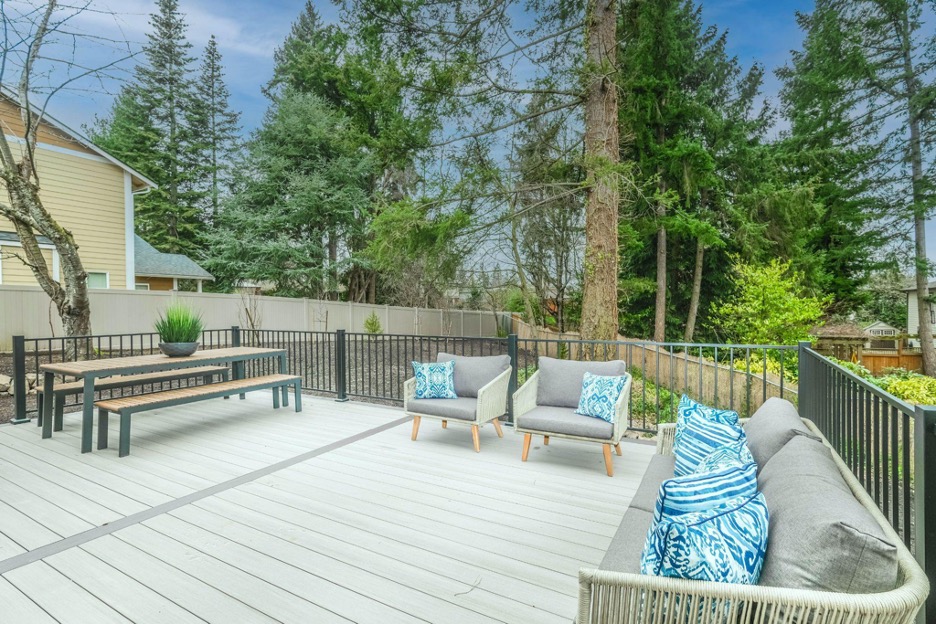
Your home’s exterior can make a huge difference in the number of people interested in your home: and how much it’s worth. If you’re interested in boosting the price of your property and aren’t afraid to put in a little extra work, here’s how adding a deck can increase your home’s value! Add Visual Appeal Visual appeal is one of the biggest reasons to add a new deck! Not only does a new deck look fantastic, but you can paint or stain it any color you want. This allows for a custom and gorgeous look that will set your lawn apart from anyone else’s. This type of addition is especially valuable if your lawn is otherwise unremarkable or has low spots that gather water near your home. The deck will give you a dry and comfortable place to sit and a way to hide drainage as you guide this water away from your property. Increase Usable Outdoor Space Since 2020 there’s been a large emphasis on usable exterior spaces that allow homeowners to get the most out of their homes. Instead of letting your home be uninspiring outside, you can enjoy a new and usable outdoor space that looks fantastic. This will ensure you get more benefits like vitamin D and can enjoy the fresh air. Over time this is proven to improve mental and physical health and can be awesome for everyone within your home. Affordable Materials Mean High ROI How much of a return you get on your investment depends on how much you paid for your lawn or rooftop deck and whether the market will be able to add that value to your home. Most decks add around 80% of the price of the build back into the property. Although this may not seem like a lot, if you built your deck five to ten years ago, that means you get to enjoy using it for that period of time and then enjoy selling your home for more money. Don’t cut corners, though! Get materials that are high value and able to last for as long as the future owners will need them. Can Add Square Footage to Property How large is your home? If your deck is large enough, you can often add its space to the square footage of your property. This is an incredible chance for anyone with a smaller house to spread out the area a little and possibly boost the value of their home without having to build an entirely brand-new bedroom onto the home. This can vary from state to state, so look into local laws and guidance, and work with a professional realtor before you decide to follow this update. Makes Home More Interesting to Families If you’re planning on selling your property any time soon, a deck will add a lot of valuable interest to your home. Buyers will love the idea of spending time outside with their loved ones and will instantly picture what their life will be like if they bought your home. Keeping up to date with the best polyurethane for decks you can find, and ensuring it always looks fresh and new, regardless of how old your patio is, is important as well. Nobody wants to buy a property with a rotting or old deck that they’ll have to replace or take down in a matter of years. Safer Area in Backyard In many areas, there are tons of risks within a backyard, from puppy poop to fire ants and even scorpions if you’re in a place like Arizona. Adding simple cedar deck boards and creating a gorgeous deck will give you a chance to pull up and away from your lawn. You can still enjoy it and get the most out of the outdoors without having to worry about where you’re stepping. Adding materials like hog wire deck railing makes it even safer, ensuring nobody falls or trips when they’re on your deck. Great Entertainment Space Entertainment is a must! We all love having friends and family over, so creating a space that’s not only a focal point but also attractive for your friends and family to visit will make a huge difference. You can take this even further by adding a grilling and outdoor kitchen area on your deck. Over time awesome memories will be created here, and it’ll feel like the main space of your home. It’s vital that if you do this, you ensure your wood is treated often and that your property is able to handle anything that’s thrown at it. This is especially true if you have more than ten people in any gathering on your deck. A New Deck Can Change Everything Whether you’re eager to sell soon or you’re trying to create a property that will be a great nest egg eventually- your deck matters. Add value by building this great entertainment space soon. Sam Willis is a freelance writer that loves sharing his knowledge and expertise on real estate. He lives in Atlanta, Georgia where he enjoys spending time with his wife and researching real estate trends in his free time. Sam’s work as a freelance writer can be found on Building Product Advisors, a new construction industry resource launching in Fall 2022. – Sam Willis
How to Hone in Your Home-Buying Priorities

There are a myriad of factors that you must take into account when you’re searching for a home. In addition to your budget, you need to think about how long you want to live in a home, what neighborhood is best, and what school district you want to be in. Of course, some of these considerations are more important than others — especially when you’re choosing between a starter home and your forever home. Consider these tips and help from Franklin Investment Realty to establish your priorities and make the right choice. Assess Your Plans for the Future One of the biggest factors that will influence your home search is how you envision your future. If you plan on having kids in the next few years, for example, investing in your forever home may be a better idea. It will likely be bigger, offering more room to expand your family. Along with the additional space, though, will come more need for upkeep — and a bigger price tag, too. Still, the additional cost may be worthwhile if you really want to put down roots in the area you’re shopping in. You can also avoid the hassle of moving again if you choose to invest in the home that you plan to stay in forever. Although a forever home will cost more, it could also be a wise financial move if you’re able to snag a low interest rate on your mortgage. Conversely, if your plans for the future include a home that you can rent out in a few years, a starter home may be the better bet. A starter home will allow you to build equity and then eventually turn the property into a source of income. Additionally, if you plan on staying for the long haul, it can be a good idea to explore your home warranty options. Not to be mistaken for homeowners’ insurance, a home warranty protects your home from incidentals, like appliance breakdowns or problems with essential systems like HVAC, plumbing, electrical, and more. Check out these steps to find the best home warranty provider. Decide What You Can Afford Your budget will likely be a deciding factor in whether you go for a starter home or your forever home. In most cases, a forever home will be pricier because it will be bigger than a starter home, and it may also be in a better area or have more amenities. You will need to weigh whether these additional features are worth the bigger monthly payment you’ll be faced with. Although a starter home may have a lower listing price, there may be substantial repairs or upgrades necessary to get it to the point you want. According to statistics, the average home remodel costs between $19,800 and $73,200. This is no small sum, and it could offset the savings you gained by choosing a starter home. This is especially true if you choose a fixer-upper that needs extensive repairs. Finally, you should consider how easy it will be to resell the home you choose. Life changes can happen unexpectedly, and even if you opt for your forever home, you may find yourself needing to sell it. A starter home will likely be more difficult to resell — especially if you only invest in minimal upgrades. A forever home, on the other hand, will likely attract more interest from prospective buyers. Get Your Priorities Straight Before House Shopping Finding the right house can be difficult, but it can also be rewarding when you finally find the perfect home. Before you can find the perfect home, you need to determine whether you’re looking for a starter house or a forever house — and you need to get your priorities straight. – Suzie Wilson
Durable Renovation Projects to Reduce Maintenance

Maintenance can be one of the worst parts of any property. We all want a home that will last and look great while also being cost-effective: but is that realistic without putting in a ton of constant work? It can be! These are some of the best ways to get your property into great condition and halt the need for tons of maintenance! Windows That Can Handle Anything Your windows can be the best or worst part of your property. If they’re loose and leak air, you know that your heating and cooling bill will be wildly expensive at all times. If you’re struggling with these bills, consider updating to storm windows. Not only are storm windows more likely to stay sealed for longer regardless of weather and surroundings: but they’ll also protect your property if you’re in an area that deals with hurricanes, tornadoes, or thunderstorms. Of course, storm windows cost more than the average window: but it’s worth it. Updating Your Appliances How old are your appliances? If you’ve had to call someone out to help with your dishwasher more than twice in the last year, or your oven feels like it’s letting out tons of heat and isn’t cooking your food as evenly as it used to: it could be time to update your appliances. This is an expensive fix: but you don’t have to worry about that expense for long! Going for energy-efficient appliances means that your home will be comfortable, and your electricity bills will stay lower than you’d ever expect. Replacing An Older Roof How old is your roof? An older roof will let out far more air and cause leaks, make your home more susceptible to rodent and insect life, and can be generally hazardous. If you’ve been spending years using a roof cover board and doing one-off repairs to try and make your roof last longer, it could be time to give up the chase and replace it full out. This replacement will give you the chance to kill off the amount of maintenance you need to complete on your home. Composite insulated roof panels can also boost how well your home keeps the temperature. Keeping an Eye on Your Siding How old is your siding? If you notice you have issues with ants, or your home seems to be getting a lot of noise pollution:, it could be time to update your siding. By looking at it, you can check to see if it’s warping, bent, discolored, or cracked: all signs that it’s time to update it. Updating your siding will fix a host of other issues and allow you to have a low-maintenance home with lower monthly bills to boot. Updating Your Lawn With Native Plants Plants that are native to where you live are one of the best things you can do to reduce maintenance and work on your property. These native plants will ensure your lawn doesn’t flood and, instead, the water into the soil. They can also reduce the amount of work and watering your news to do on your lawn since these plants will already be acclimated to the surroundings they’re in. Replacing an Older Garage Door How old is your garage door? An older one will be worse at keeping out moisture and insect life and can even get stuck open or closed: making it hazardous for whoever is in the garage. Replacing this door is also a home renovation project that offers the largest return on investment and gives you the chance to update your property’s look. This is a must to avoid future trouble. Repairing Cracked Concrete Cracked concrete is going to hurt you in the long run. When it goes through freeze and thaw cycles, these cracks will get larger and larger until you have to replace the entire slab. Instead of ignoring them, or working around them, consider either repairing the cracks: or replacing the pavers with some that are designed to be cracked. These come in gorgeous patterns that can allow them to move more fluidly with changes in the ground without cracking and can last longer. Swapping Carpet for Sturdier Options You may love your carpet flooring, but it’s not good for you and could be adding to how often you have to replace your HVAC filters. Carpet traps dirt, grime, and dust, and even if you vacuum, it doesn’t give up all of it. Although it may look cleaner than the average wood floor, it’s full of oils and debris that nobody should want to keep on their floor at all times. Beyond this, carpet ages quickly and can go even faster if you have pets or children. Swapping the carpet for hardwood, tile, or laminate can save you in the long run. Your Home Can Be Low Maintenance Although you may have already poured hours of work and time into your property: there’s no reason it can’t start to be lower maintenance starting today! Take the time to follow some of these tips, and make your property a dream to take care of in no time. Sam Willis is a contributor to Innovative Building Materials. He is a blogger and content writer. Sam is focused on helping fellow homeowners, contractors, and architects discover materials and methods of construction that increase property value, maximize energy savings, and turn houses into homes. – Sam Willis
Five Ways Real Estate Developers Can Invest in Safety

Successful real estate investors know how to juggle everything. They can make a profit, attract prospective tenants, and protect workers’ safety all at the same time. Developers who cut corners, though, may pursue profits above all else. In addition to the ethical concerns this brings up, it’s typically not an effective approach. When you skimp on safety, costly liabilities may come to fruition. Find out what it takes to become a real estate developer — and how you emphasize safety in your projects. Always Implement a Contract You may not think of a contract as a safety feature, but in many ways it is. An effective contract will outline the responsibilities of each party. This is important when you’re contracting with construction workers. Your contract should clearly identify the standards that they will be held to regarding safety. As you’re drafting this document, you may use Word so that it’s easier to edit, but you should convert it to a PDF before sending it to a client. You can do so with a Word-to-PDF converter tool. Keep an Eye on Construction Some real estate developers may take a metaphorical vacation between the time when a property is purchased and tenants are sought. This is a major safety risk, though, as a construction site should have constant oversight so that liabilities are avoided. This starts with choosing a site that has minimal flood or fire risk. Once building starts, a developer should further ensure its safety by establishing clear guidelines and enforcing them consistently. Personal protective equipment should be supplied, for example, and required at all times. Work With Trustworthy People It can be hard to know who’s trustworthy in a business context, but making this discernment is an essential safety issue for any real estate developer. In addition to a construction crew, you may need to work with professionals such as investors, a marketing and sales team, and an attorney. When you are looking for these people, you should ensure that they care about safety as much as you do. Install Lighting to Protect Pedestrians and Drivers Lighting is another essential component of your development’s overall safety. You might not think that lights can play a major role in reducing crime and preventing accidents, but research proves that they do. Indeed, if you have a parking garage on your premises, you need to ensure that drivers are able to see — even if there are canopies or tunnels. If you’re looking for canopy lighting, strategically placed lighting will ensure visibility so that pedestrians are safe. Ensure You Have the Right Qualifications In many states, there are no explicit requirements to become a real estate developer. If you aim to conduct real estate transactions, you may need to obtain a real estate license to do so. The criteria for licensure vary from state to state, but most areas require an educational component and passing a test. If you simply want to develop properties, though — and allow somebody else to manage the real estate — you can likely do so without a license. If you are seeking funding from a bank or investor, though, they may be more willing to provide financing if you can prove your qualifications. Pursuing real estate development is an ambitious decision, but it can pay off if you’re willing to invest in safety, protect yourself with contracts, install the right lighting, and ensure you have the necessary qualifications. If you’re looking to buy or sell an investment property, contact the experts at Franklin Investment Realty today! – Shirley Martin